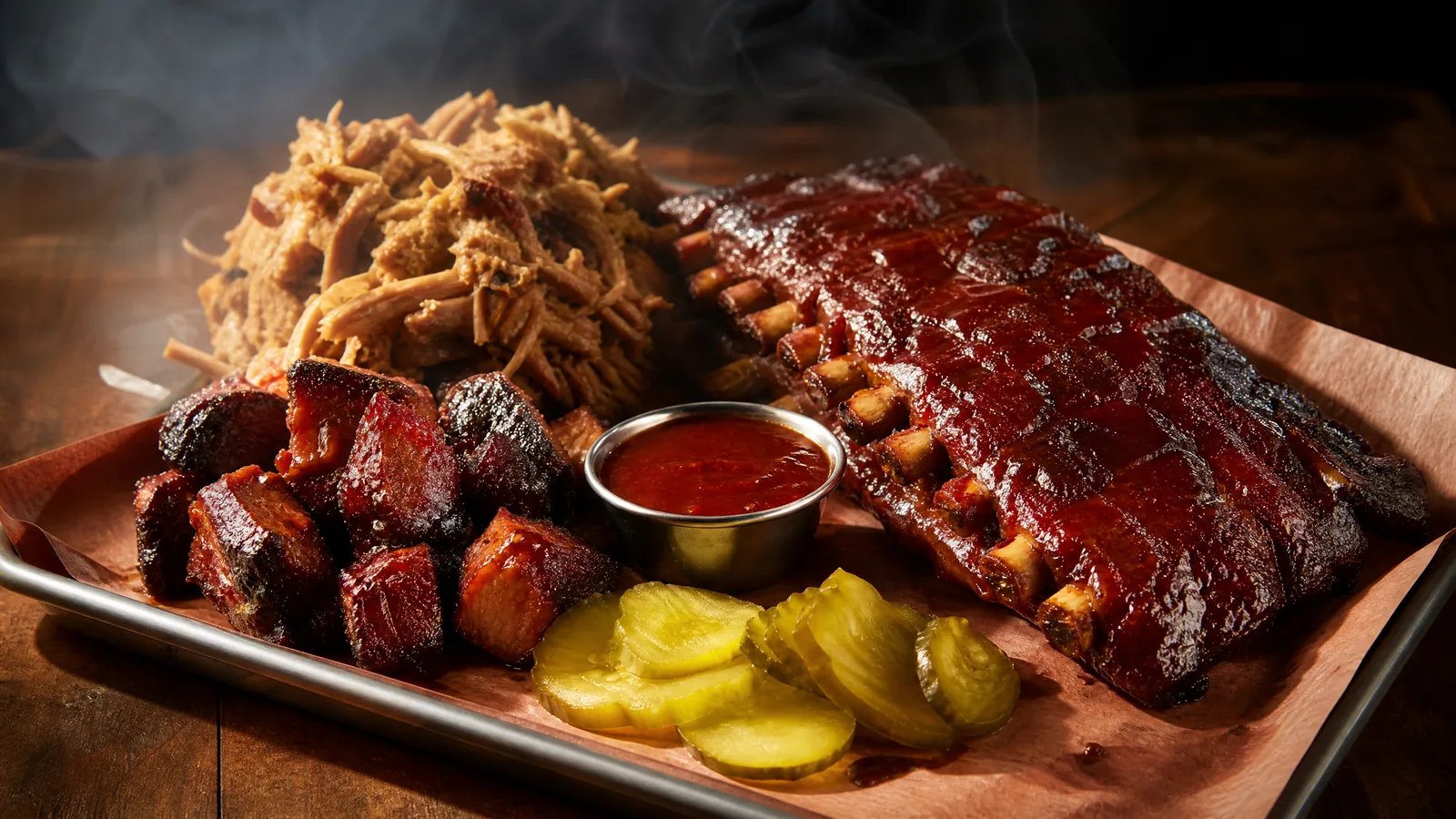
Kansas City's Signature: The Story of Burnt Ends
From counter scraps to destination barbecue, the brisket point tells the story of Kansas City smoke.
AIAI-assisted article, reviewed by the BBQ Atlas editorial team.
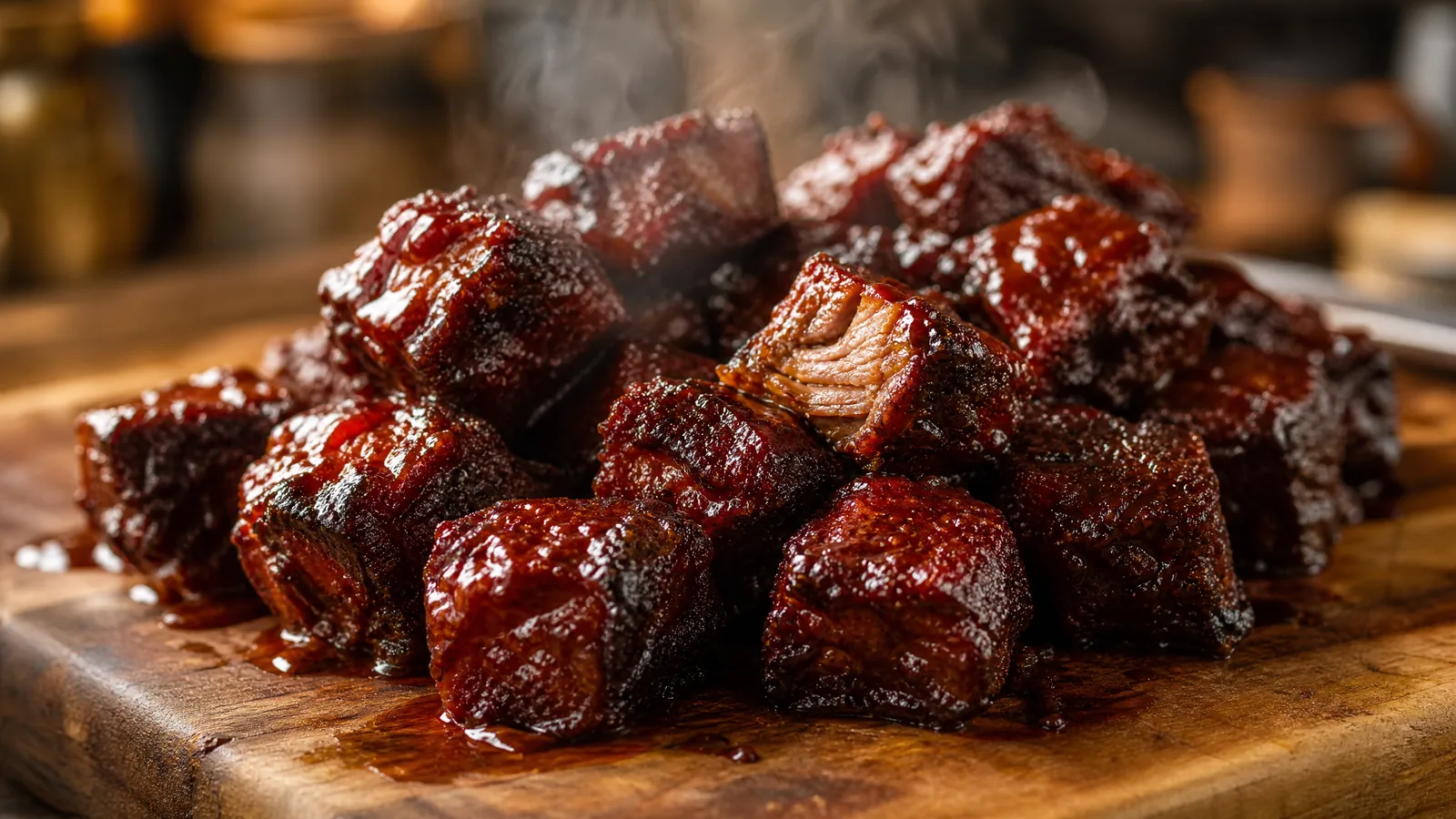
What a burnt end actually is
A proper burnt end starts with the brisket point, the thicker, fattier muscle that sits over the leaner flat. As a whole brisket cooks, the point takes on smoke, seasoning, and heat while its internal fat slowly renders. Pitmasters separate or trim that section, cut it into cubes, then often return the pieces to the smoker so more surface area can darken and caramelize. That second round is what gives great burnt ends their contrast: crusty edges outside, rich and yielding beef inside. If you want the broader cut in context, compare the city's best brisket with its dedicated burnt ends guide.
From free scraps to the main event
The famous origin story is part thrift and part barbecue folklore. In Kansas City's old counter-service joints, the crusty ends and trimmings from brisket were once treated as irregular pieces rather than premium portions. Customers could snack on them while waiting, and the bark-heavy bits developed a following of their own. Over time, what looked like scraps became the reason people showed up. The transformation fits Kansas City perfectly: a city known for smoking almost every cut found its most distinctive bite in the part that seemed least formal. Our Kansas City BBQ guide puts that evolution alongside the rest of the local tradition. That change also altered expectations at the pit: diners began seeking the fatty point specifically, not accepting it as a by-product of sliced brisket. The name stuck because the exterior looked nearly burned, even when the interior remained soft and juicy. What matters is controlled darkening, not actual charring.
Why the bark matters so much
Burnt ends live or die by bark. The exterior should taste intensely beefy and smoky, with seasoning fused into the surface rather than sitting on top of it. Once cubed, the extra edges give smoke and heat more places to work. A little sauce can tighten into a sticky glaze, but the best versions still taste like brisket first. Kansas City's thick, sweet style is especially suited to the job because sugar and tomato cling to those rough surfaces and deepen as they cook. For the national backdrop, the four styles of American barbecue shows why that sweet-sauce finish feels so distinctly KC.
Three classic stops
Start with Arthur Bryant's, one of the foundational names in Kansas City barbecue and an essential place to understand the city's old-school counter tradition. Joe's Kansas City offers another benchmark, with the tidy execution and broad popularity that helped make burnt ends a must-order for visitors. Then try Jack Stack Barbecue, where the style appears in a more polished dining-room setting without losing the fundamental appeal of bark, fat, and smoke. Together, the three show how the same idea can move from historic institution to modern destination while staying unmistakably Kansas City.
The best burnt end gives you bark, smoke, fat, and sauce in the same forkful.
How to judge a great one
Look first at shape and texture. Good burnt ends are irregular enough to feel hand-cut, but not so shredded that they lose the point's meaty structure. The bark should be dark and concentrated, not simply scorched. Inside, the beef should stay moist from rendered fat, with enough chew to remind you it came from brisket rather than pot roast. Sauce should glaze rather than drown. A balanced cube finishes smoky, savory, sweet, and rich without any one note taking over. If you're building a full tasting route, the Crossroads Arts District makes a useful base for exploring more of the city's barbecue map. Temperature and timing matter here. Pull the cubes too soon and the fat stays waxy; leave them too long and the meat dries while the glaze hardens. The sweet spot is a piece that bends under a fork but does not collapse, with bark that has enough tack to hold seasoning and smoke.
Order them like a Kansas Citian
Burnt ends are rich, so treat them as part of a spread rather than the entire meal. Pair a half-order or shareable portion with sliced brisket, ribs, sausage, or another smoked meat so you can compare textures and smoke profiles. Eat one cube before adding extra sauce; the bark tells you more about the pit than the bottle does. Then try the next bite with sauce and notice how the sweetness changes the finish. That contrast — smoke first, glaze second — is the clearest way to understand why Kansas City's once-humble trimming became its signature.
Explore more on the Atlas
- Kansas City BBQ guideEvery pit, area, and dish we cover in Kansas City.
- Best burnt ends in Kansas CityWhere to find the city's signature brisket bite.
- Best brisket in Kansas CityCompare the point with the broader brisket tradition.
- The four great styles of American barbecueSee how Kansas City fits the national barbecue map.
- BBQ in the CrossroadsExplore one of Kansas City's central barbecue districts.
The Kansas City BBQ shortlist, by email
New burnt-ends spots, KC guides, and the pits worth the drive — straight to your inbox, never spam.
Yes, email me BBQ Atlas updates. I can unsubscribe anytime via the link in every email.